Ten years since the passing of the Thin White Duke, Alexander Larman reflects on the lost years of David Bowie’s life and career.
Given how vital it was to his artistic development in the 1970s, there is something oddly fitting in the fact that David Bowie’s final concert proved to be in Germany, in the Eichenring venue of Scheeßel on 23rd June 2004. Towards the end of a gruelling tour designed to promote his latest album, Reality, he found himself unable to complete the gig, departing after The Man Who Sold The World. He explained to the crowd that it was due to a trapped nerve in his shoulder, but it soon became clear that he had suffered a heart attack, necessitating surgery, complete rest and the cancellation of the remaining dates of the tour. An apocryphal comment ascribed to him was that he had remarked ‘I tell you what, I won’t be writing a song about this one.’
Musicians in their fifties suffer from physical strain, and so the general feeling towards Bowie was one of enormous sympathy, mixed with the expectation that he’d soon be performing live and recording again. Although no announcement was made of a new album or tour, he kept surprisingly busy in the months after his recuperation, making public appearances and appearing as a guest vocalist for artists as disparate as Kashmir (on The Cynic, produced by Bowie’s long-time cohort Tony Visconti), TV on the Radio (on Province) and Arcade Fire. It was the latter band that he formed his closest association with, eulogizing them to anyone who would listen throughout 2005 and performing with them at the Fashion Rocks event in September, playing their song Wake Up as well as his own Life on Mars. To the external observer, Bowie might have been resting, but he was anything but retired; he even contributed a new song, (She Can) Do That, a collaboration with the music producer BT, to the soundtrack of the forgotten Jamie Foxx film Stealth.

He gave an interview to promote Fashion Rocks to the journalist Dave Itzkoff in late 2005. More interested in discussing music he was listening to than clothing (“I’m really not very good at that… let’s talk about new bands!”), he nonetheless let slip some interesting personal details about his life. Blasé about the way in which, as a style icon, he had influenced countless men and women (“I’ve always been extremely lucky that there’s some designer or other who wants to give me clothes”), he took the opportunity to plug Arcade Fire, and offered an insight into how he spent his days. “Well, fortunately, I’m not working. So I’m resting. I get out a lot. I am a New Yorker, very much, and I get out in New York. It’s just a place that I adore. And I love seeing new theater; I love seeing new bands, art shows, everything. I get everywhere – very quietly and never above 14th Street. I’m very downtown.”
He delighted in his anonymity – “Everybody knows me anyway, and they’re very quiet and respectful. New York’s New York. Nobody makes a big deal” – and, in what would become a telling quote, mused on the potential end of the ‘David Bowie’ persona when he commented, “The Bowie character, for me, is strictly to be used for the stage, so I can hide back away as David Jones. Right now, in the mountains, where I am at the moment, it’s David Jones. With my family I am David Jones, very much.”
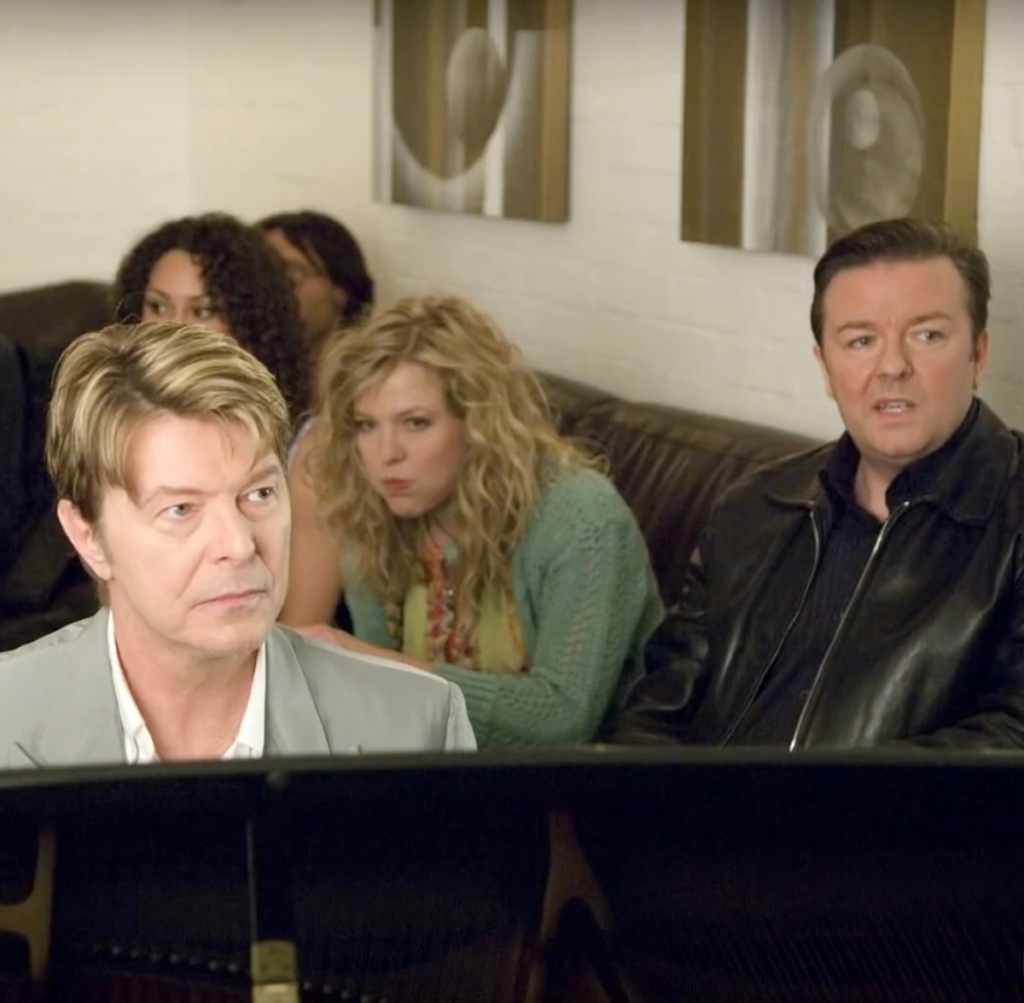
‘The Bowie character’ reappeared a few times more. He appeared as a special guest at a David Gilmour gig at the Royal Albert Hall in June 2006, crooning his way through Arnold Layne and, magnificently, Comfortably Numb, as well as performing a short three-song set at the Black Ball fundraiser in November that year, duetting with Alicia Keys on Changes and singing Fantastic Voyage and Wild Is The Wind. Nobody present at either gig guessed that they were to be, respectively, his last live performances in Britain and America, barring a brief cameo at a Ricky Gervais gig at Madison Square Garden in June 2007. The song he performed with Gervais, Pug Nosed Face, had been co-written by the two for the sitcom Extras, in which Bowie guest-starred as a suave version of himself; unlike many of the other celebrities who were caricatured in absurd ways, Bowie was allowed to retain his charisma as he sang a ballad mocking Gervais’ character Andy Millman as a ‘chubby little loser’ and ‘the clown that no-one laughs at’. It proved to be the very last time he appeared on television.
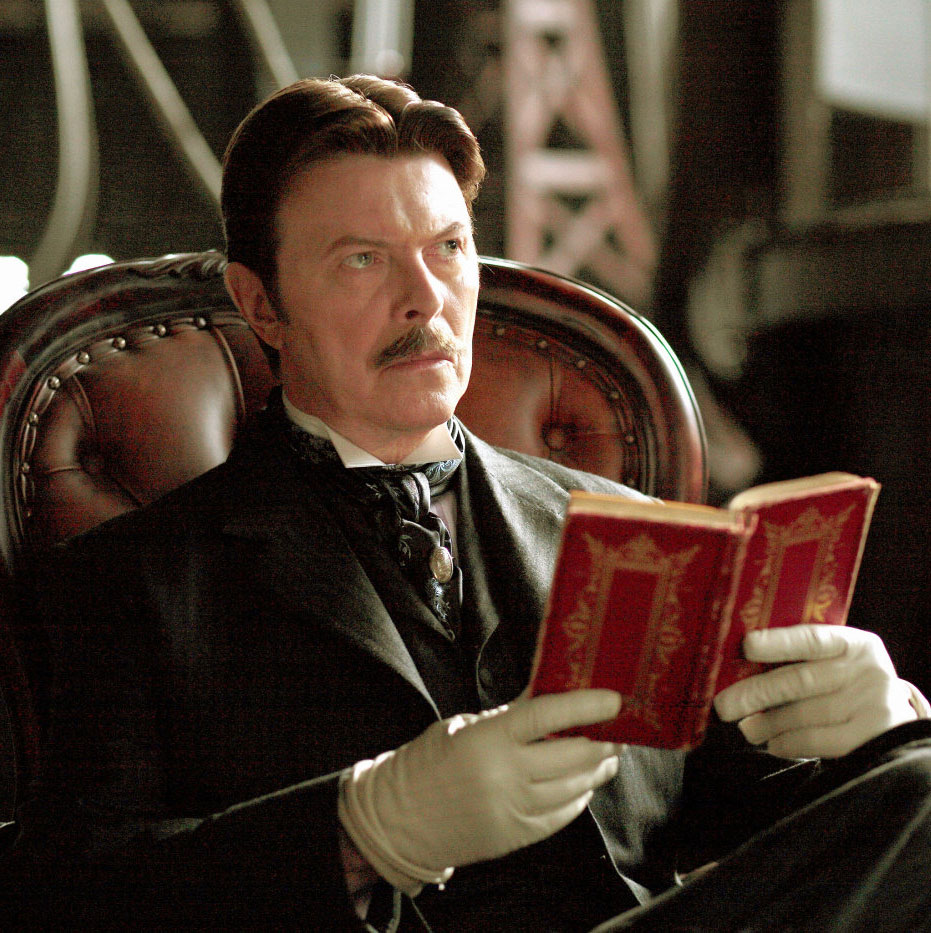
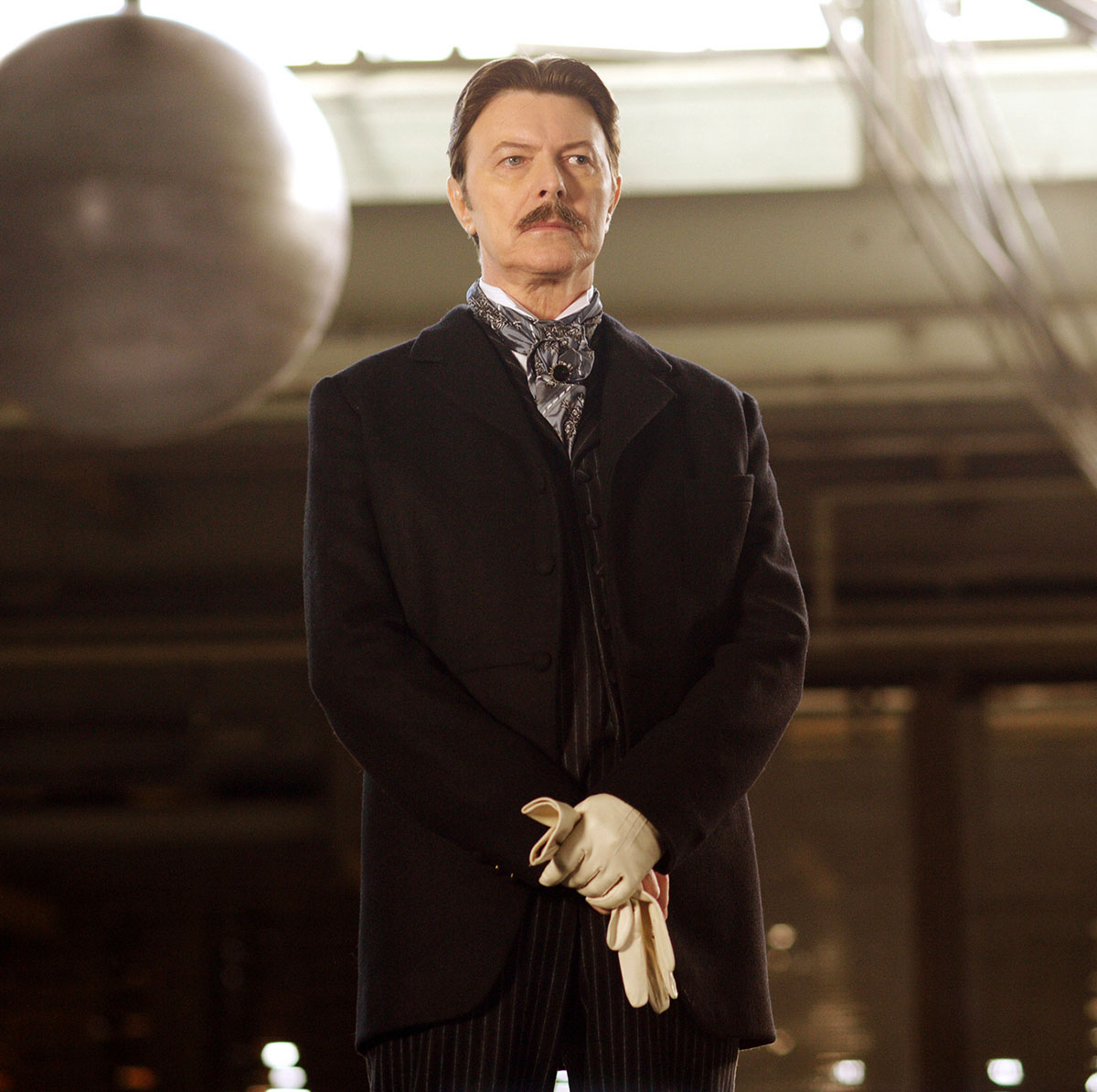
Likewise, what was a sporadic but consistent post-illness recording career seemed to end after an odd collaboration with the actress Scarlett Johansson, who released an album of Tom Waits covers. The two had appeared in the film The Prestige (although never on screen together) and she had jokingly asked Bowie if he would appear on her forthcoming album. Apparently on a whim, he headed into the studio in summer 2007 to sing backing vocals on two songs, Fanning Street and Falling Down. Neither song is a classic, but Bowie’s suitably tortured drama counterpoints Johansson’s deliberately flat singing to entertaining effect. And that was that.
Records of what Bowie did between leaving the studio in 2007 and the grand return of 2013 are sketchy. He wasn’t entirely absent; he made a few public pronouncements, such as welcoming Obama’s election in 2008, and offered the odd soundbite here and there. The only musical contribution of note was when he re-recorded vocals and overdubs for a new version of Time Will Crawl, which then appeared on his iSelect album, a free compilation given away with the Mail on Sunday in June 2008; he contributed liner notes to the album, which mixed classics (Life On Mars) with more obscure songs, such as Some Are, which was previously a B-side recorded with Brian Eno, and these, in classic Bowie fashion, combined apparently openness with cryptic distance. He remarked of Life On Mars that “this song was so easy… being young was easy”, but a truer indication, perhaps, of his concerns lay in his comment on the disturbing Repetition that “I decided to write something on the deeply disturbing subject of wife abuse in the manner of a short-form drama… I had known more instances of this behaviour than I would have preferred to have been made aware of, and could not for the life of me imagine how someone could hit a woman, not only once but many, many times.”
Happily married to Iman and with a young daughter, Lexi, it is tempting to imagine that Bowie, wealthier than most could even dream of, would have preferred to have retired and left the music business altogether, embracing a quiet family life instead. Unfortunately, it is difficult for musicians of Bowie’s stature to disappear altogether, and rumours began to circulate that he was near death, or that he had dementia. Despite commenting to Visconti that “I’ve got no interest in recording any new music… I’m done”, it seemed as if the only options available to him to refute the rumours were either to become a public figure – if not a musician – again, or to begin recording. Thus it was that, in late 2010, Visconti was contacted again, and unexpectedly asked whether he would be interested in collaborating on some demos.
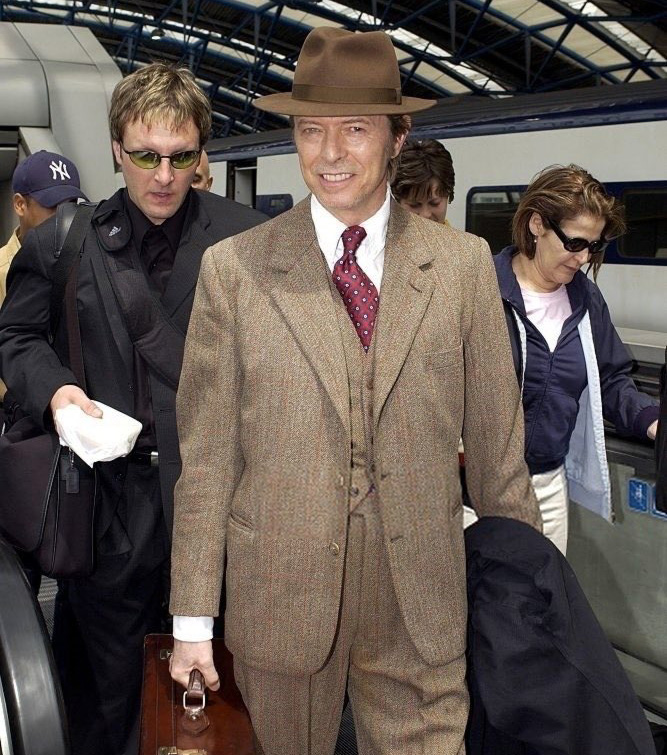
The rest of Bowie’s old touring band soon received similar approaches, conducted in complete secrecy; they began recording what would become The Next Day in May 2011, based on a collection of songs that might well have formed a similar album to Heathen or Reality. All involved in the production signed non-disclosure agreements, but given how closely the musicians had worked with him before, such secrecy was unnecessary. (Visconti had jokingly mentioned to one of the band that ‘there’s a young singer-songwriter called David Jones who wants to cut a record, and he needs our help.’) The recording process took Bowie and the band the best part of two years, with Bowie, at times, agonizing as to whether the material should be released at all, but finally, by the end of 2012, a collection of songs had taken shape.
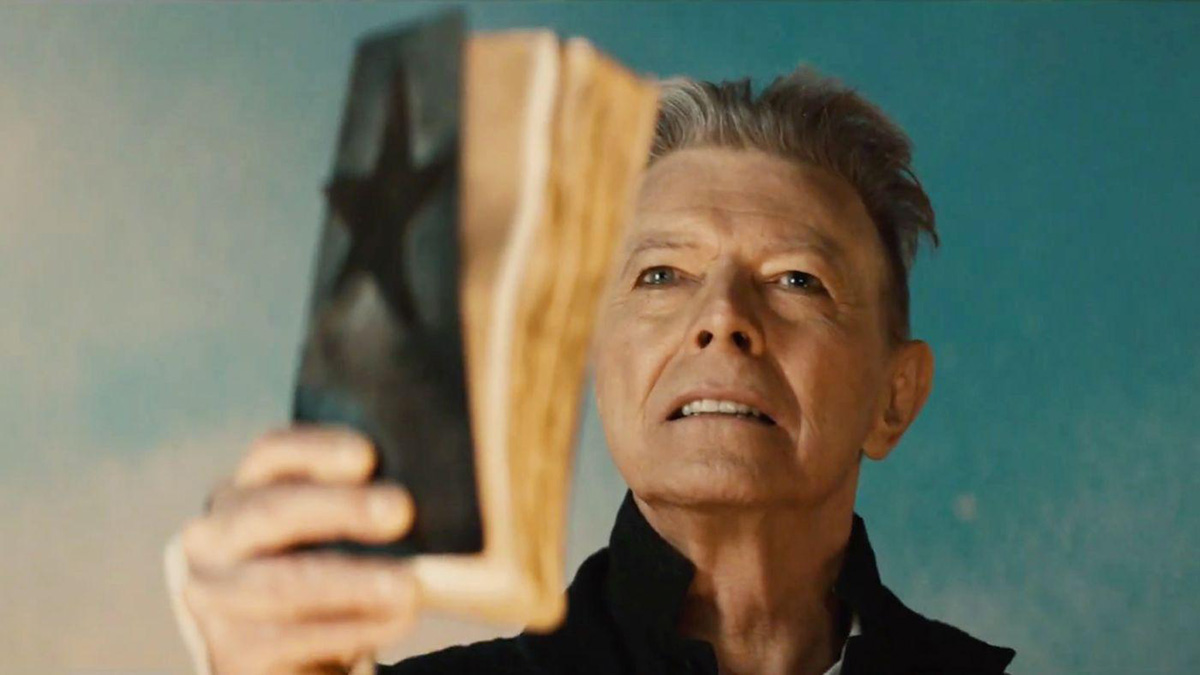
On 7th January 2013, a wild rumour appeared late on Twitter. ‘David Bowie’s releasing a new song!’ There had been many of these stories, and all had been false, arising either from misunderstandings or wish fulfillment. However, this time, the stories proved to be true, and The Next Day was heralded with the release of the first single, Where Are We Now? on 8th January. One of Bowie’s finest songs, it took an elegiac look at his time in Berlin – rare for a singer who tended to avoid autobiography – and the video, directed by the artist Tony Oursler, presented a fragile-looking Bowie wearing a T-shirt bearing the legend ‘Song of Norway’, an allusion to his former girlfriend, the actress Hermione Farthingale, who appeared in a film of that name. Nonetheless, his sudden and unexpected reappearance put an end to rumours of ill health, and once again stories of live gigs and interviews began to circulate.
Three years later, it was a rather different story.
David Bowie, 8th January 1947-10th January 2016
Alexander Larman is the author of Lazarus: The Second Coming of David Bowie