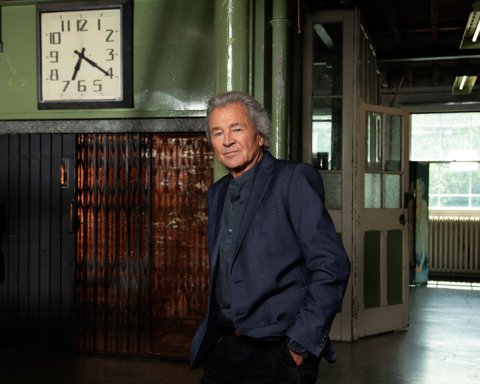
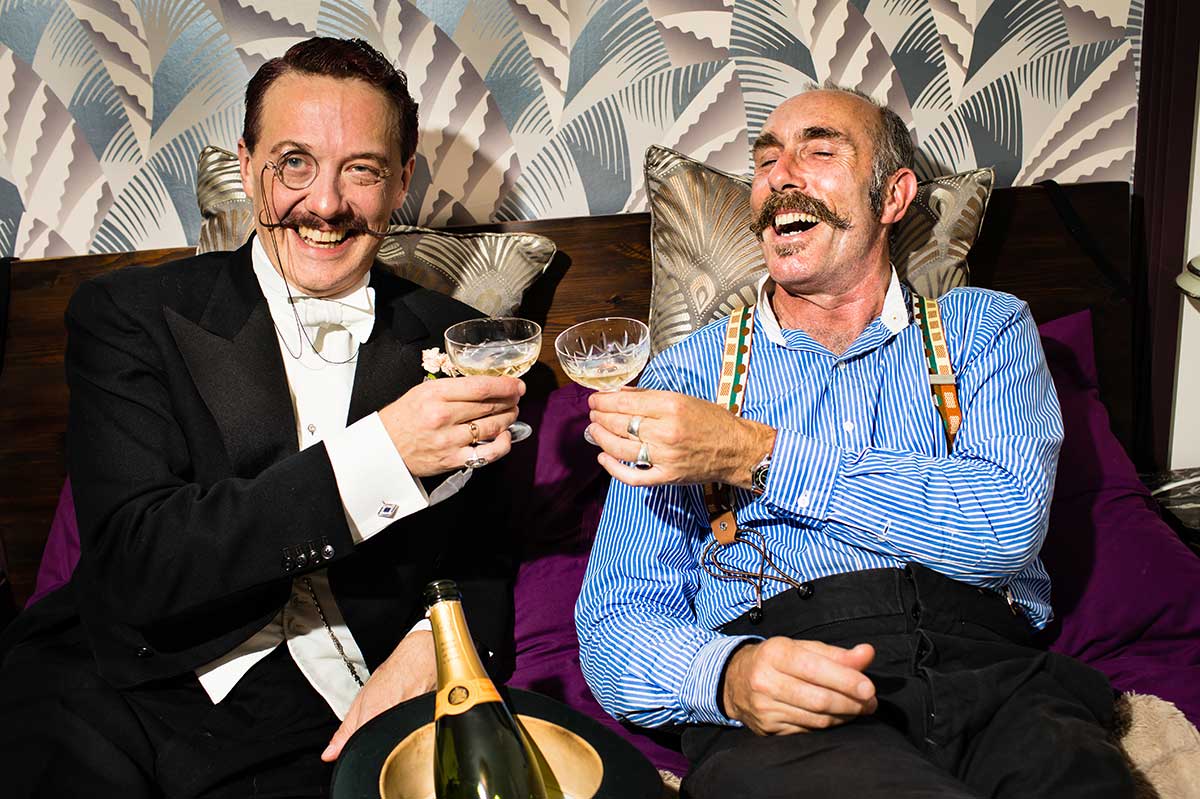
Gustav Temple spends an afternoon sipping fizz with bon vivant, cabaret performer, dapper chanteur and host of the Candlelight Club. Photos by Soulstealer Photography.
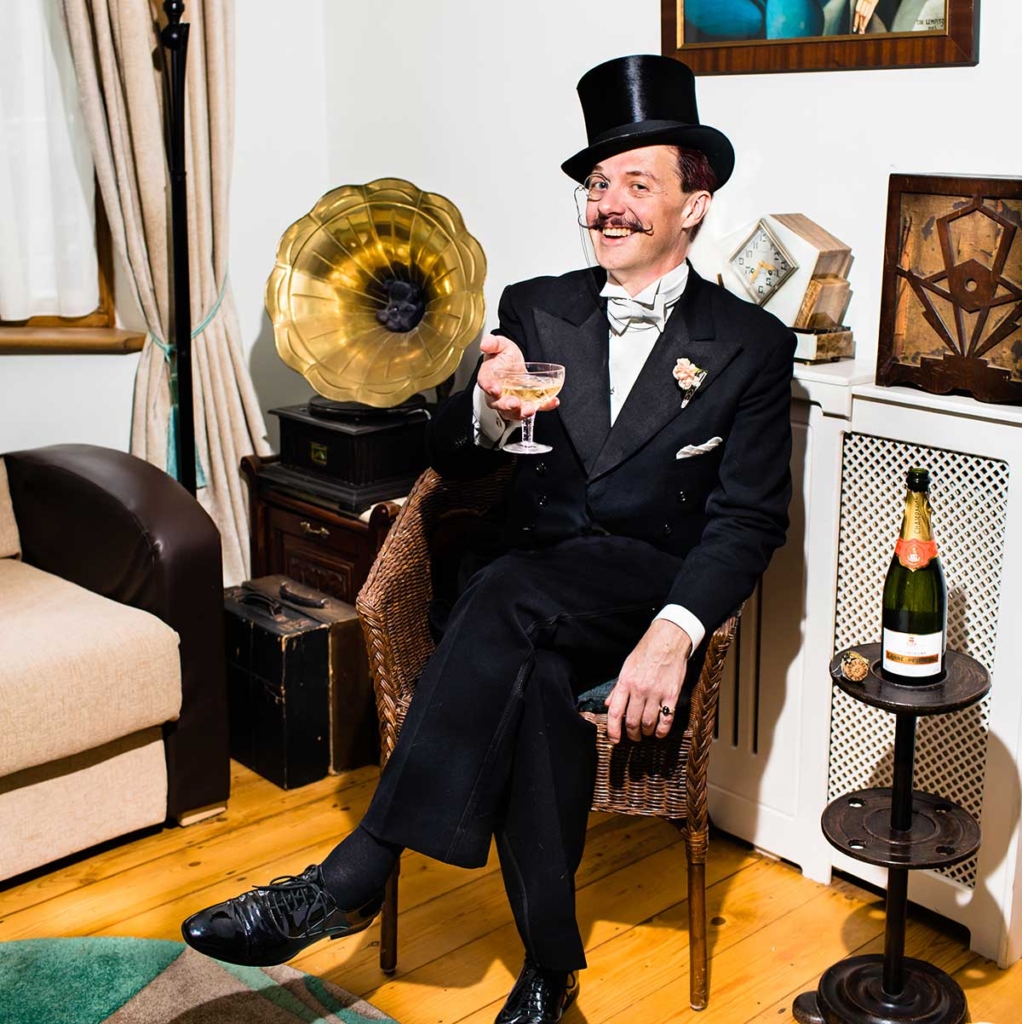
When your parents named you Champagne Charlie, was this because they were fans of the music hall performer George Leybourne?
I wouldn’t have thought they had any idea who George Leybourne was. I don’t come from a musical or theatrical family at all. I am what you might call the black sheep of the family. I didn’t really take the name from George Leybourne at all, actually. The character I wanted to create was more along the lines of the Bright Young Things. I wanted to bring it up to date and have a little more mischief in that era. The name came from a night in Kettners, where I was with a friend and she said, wouldn’t it be wonderful if we could be those people who could go into any bar, restaurant or hotel and say, “Champagne!” So the next gig I did, I told this story and called myself Champagne Charlie and the audience shouted back “Champagne!” and it just stuck.
Were you already part of the vintage cabaret scene?
I’d always been a fan of the jazz of the twenties and thirties. I trained in musical theatre. In fact I started training as an opera singer, but after the first year I realised it wasn’t for me. I wanted a bit more spangles and feathers! So I did the musical theatre course and was in musical theatre for 20-odd years. I’d always said that I’d love to have a band like the Temperance Seven or the Pasadena Roof Orchestra, and I got a gig at the Burgh Island Hotel, that beautiful shrine to Art deco, and we put the Bubbly Boys together for that. Then all the cabaret and hosting and all that followed on.
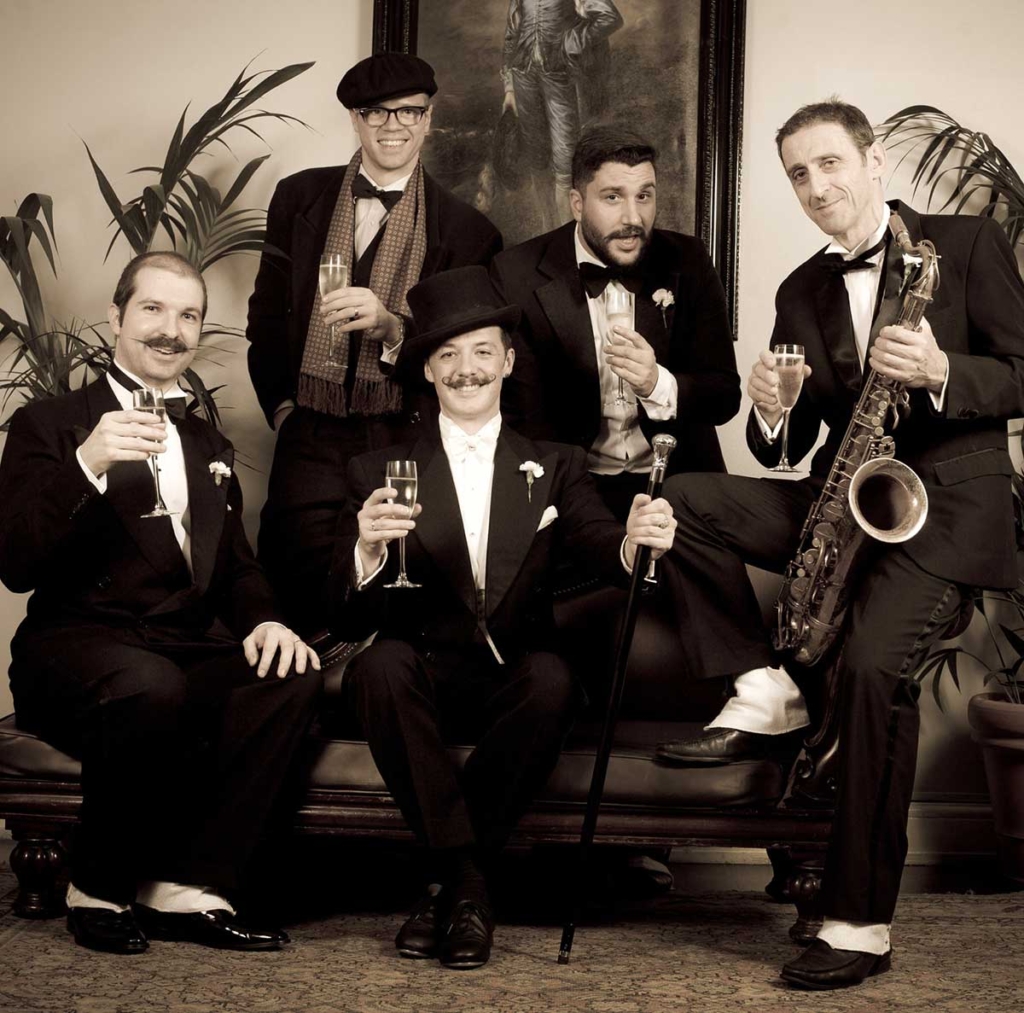
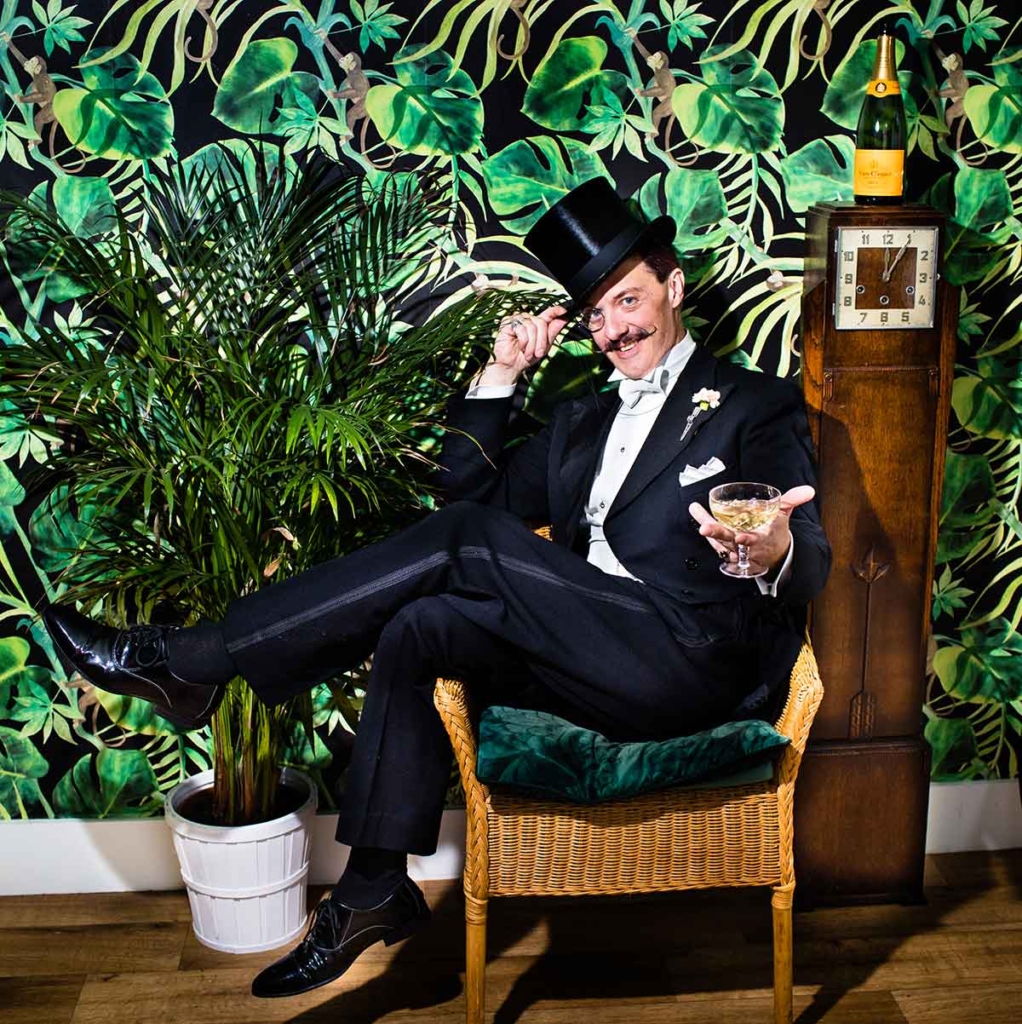
You’re wearing a rather splendid iteration of evening dress, Charlie. Is it all vintage?
It is, and there’s a very nice story that goes with this outfit. We had an auntie who died some 25 years ago, and she lived in a huge, detached art deco house in Edgware, which her husband had built for his first wife in the 1930s, and then when she died, he married auntie Doris. When he died in the sixties, before I knew him, all of his first wife’s and his stuff was still in the house when Doris died. I was clearing it out and I found this bag hanging at the back of the wardrobe. It contained a full white tie and tails outfit, top hat, scarf, gloves, the works. And by some miracle it fits me like a glove. I didn’t have any of it altered at all. The top hat was in a box and the label said, Hope Brothers, Electric Avenue, Brixton. Who would have thought?
So was there anything about that evening suit that felt special when you first put it on, as if you were infusing the spirit of auntie Doris’s husband. Do you know much else about him?
I do know that he ran one of the first electric radiogramme shops in Edgware. I picked up much more musical influences from Doris. She was a classically trained pianist and she paid for all my piano lessons and my musical theatre course. So she was massively influential on my musical career.
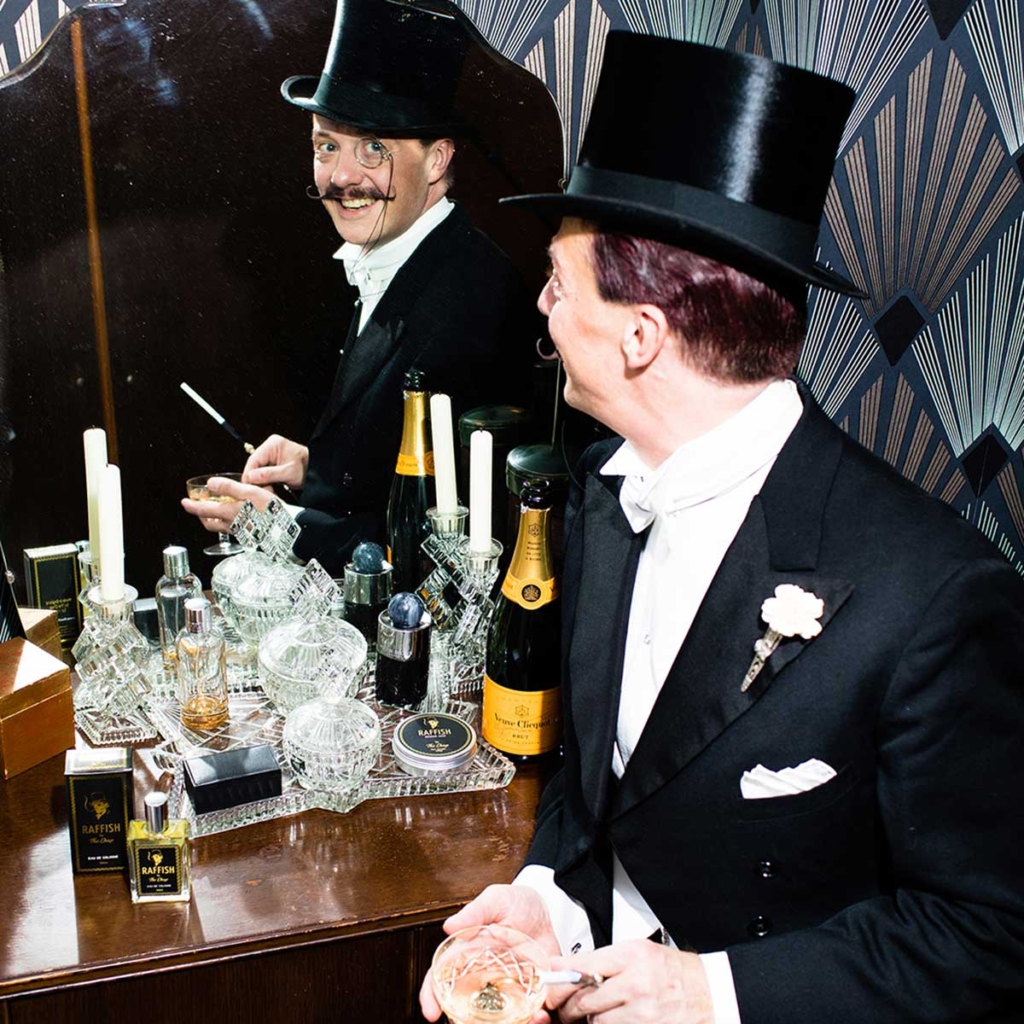
Is your repertoire exclusively composed of songs from the music hall era?
There are two strands to the repertoire. There’s the Bright Young Things, cheeky Charlie side, and we stick to the period between 1919 and 1939. When it comes to doing cabaret hosting and I can dress more flamboyantly and androgynously, then I take a range of songs from the twenties up to today.
Would you go as far as Kylie Minogue?
No! That age-old camp classic, along with Madonna, we don’t go there. It’s more things like David Bowie and Annie Lennox.
What have been the highlights of your career so far?
One of my absolute highlights was performing at the Albert Hall a few years ago. I was in a show working with a choreographer, Jenny Arnold, on the anniversary of the Battle of Britain, over three nights. There were eight of us hired to do dance routines to the orchestra. At one point I did a solo routine to Glenn Miller’s Moonlight Serenade to 5000 people over three nights.
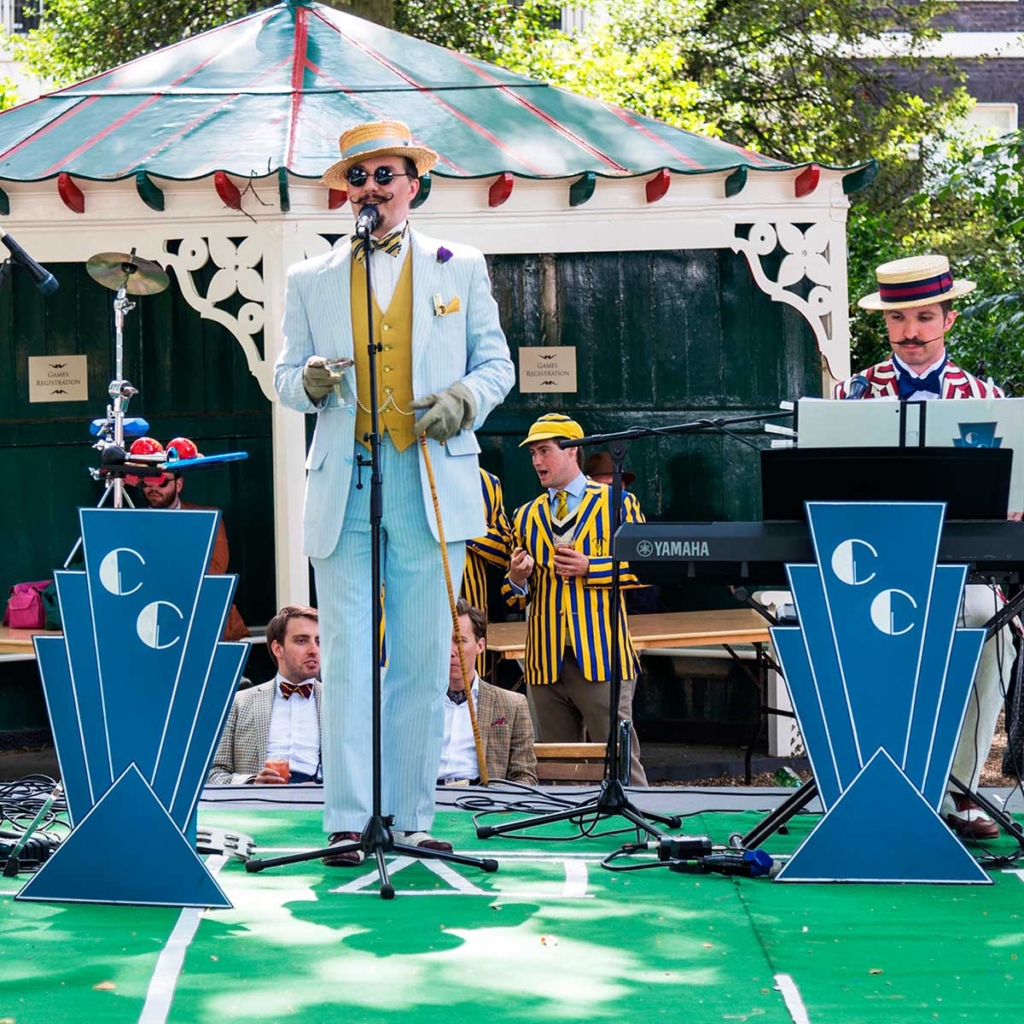
And singing at The Chap Olympiad, of course?
Naturally!
Did you, like your ivory tickler Tom Carradine (above right), have an entire career in musical theatre, before you became a cabaret performer?
Yes, I was on the stage, in fact there’s a funny story about my ‘stage husband’ that he won’t like me telling you. I am some years older than Mr. Carradine, and I was in a pantomime at the Belgrave Theatre in Coventry. There would always be a gaggle of children at the stage door to get your autograph, and apparently I signed this 13-year-old boy’s programme. Then some years later, I was looking for a piano player and a friend of mine suggested this chap called Tom Carradine and we started working together. One day he produced this programme that he still had and he admitted to having been a little fan.
You mentioned Veuve Cliquot as your fave fizz. What is so special about “The Widow”?
Old Mother Veuve, I call her. It’s got a very particular flavour, what I would describe as a biscuit taste. Other brands of champagne just don’t quite have it, I’m afraid, even though Moet & Chandon was the brand that promoted the original Champagne Charlie.
The BBC decided to remove the lyrics to Land of Hope and Glory during the televised, audienceless Last Night of the Proms in 2021. Would you ever change the lyrics to a song from the early 20th century that may be considered offensive these days?
Yes, I would. I’ve made slight lyric tweaks to some of the twenties and thirties songs, to bring them up to date and make them slightly less offensive to today’s ears. I think it’s a considerate thing to do, though there are a lot of purists who might balk at what I’m saying. I’m very much of the modern world and I love the vintage style, the vintage look and the music, but I think we’ve moved on to different values and different opinions. I think it would be a shame if some of the music got left behind because it might be considered un-PC. So if you can make a slight tweak to keep it alive, I don’t see what’s wrong with that.
From what I understand, a lot of those songs were quite fluid anyway, with lyrics changing from region to region.
Exactly. There are two or three different versions of Irving Berlin’s Puttin’ On The Ritz, which is about the black communities in Harlem. Even at the time there were changes to the lyrics to ensure it didn’t offend.
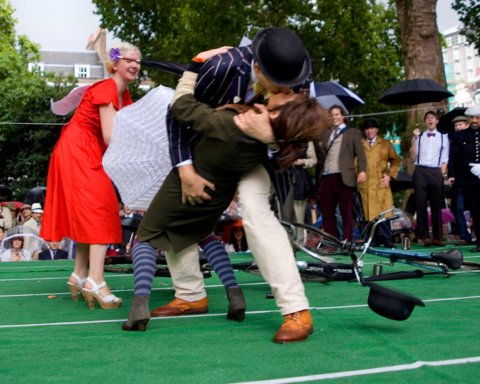
Champagne Charlie is the Master of Ceremonies at this year’s Chap Olympiad on 18th July 2026