Gustav Temple defends Emerald Fennell’s much-maligned adaptation of Emily Bronte’s novel on the grounds that it out-gothics other pretenders.
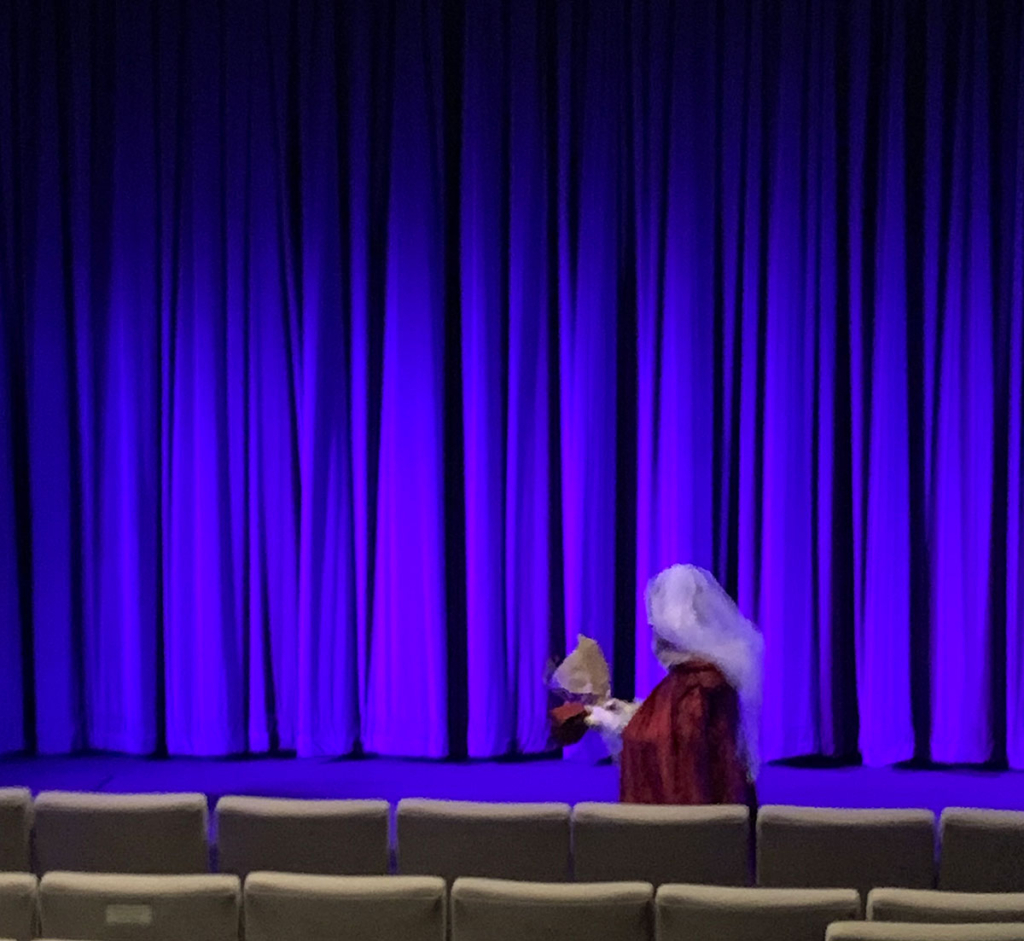
It must be admitted that my viewing of Emerald Fennell’s Wuthering Heights was already primed to be enjoyable. It was Valentine’s Day, the day after the film’s release. It was pouring with rain that night. Among the sold-out queue for the screen was a local eccentric known for his outlandish costumes. Tonight he was dressed as Catherine Earnshaw, in full bridal gown with veil, clutching a posy of faded pink roses in his hand. Expectations were clearly high for the film.
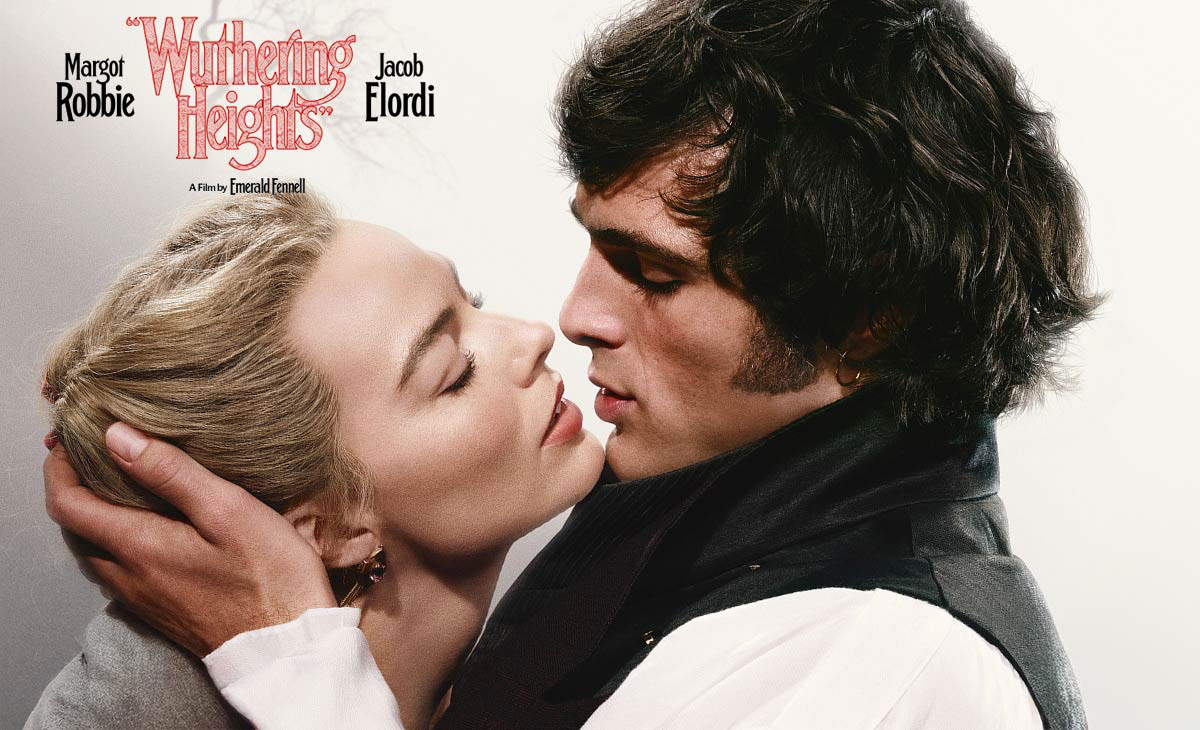
Wuthering Heights (let’s dispense with the whole “it’s in inverted commas” thing, for that seems to provide excuses for the film where none are required) immediately sweeps you off your feet from the opening scene, a public hanging during which a nun becomes aroused by a dying man’s post-mortal tumescence. It is cheesy and ridiculous, but it sets the scene in two important ways; one, by promising two hours of erotic high drama; and two, by showing from the outset that the film does not take itself too seriously.
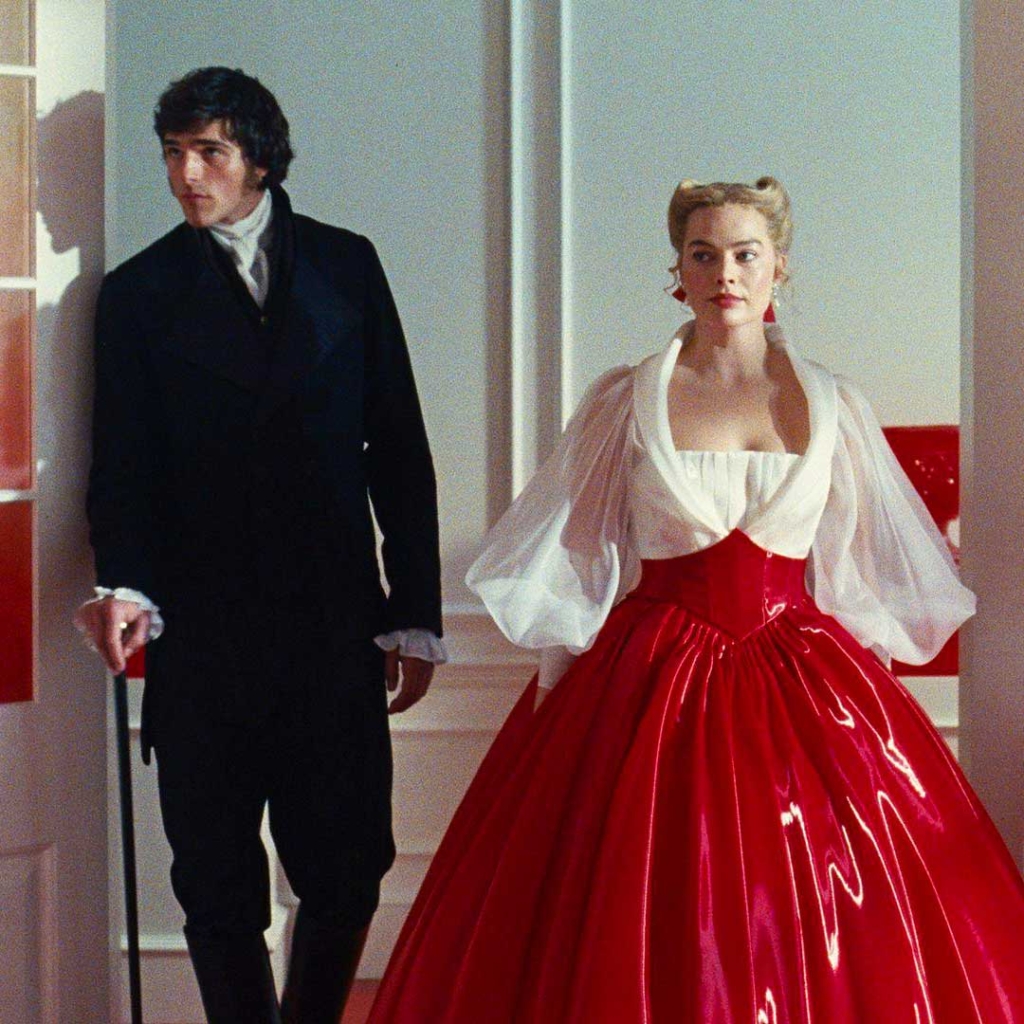
The actors wander through the set as if they are in realistic portrayals of dwellings on the Yorkshire Moors, but parts of it have been doused in such a heavy dash of Gothic that it could have been designed by Salvador Dali. Huge black rocks, glistening with moisture, loom above farm buildings; the interiors resemble high-class sex dungeons more than early 19th century country houses. A carved mass of human hands over the fireplace in the Linton home looks more like a piece of art by a Sensation-era Brit artist, or the mantelpiece of Alexander McQueen, than Regency-era country décor.
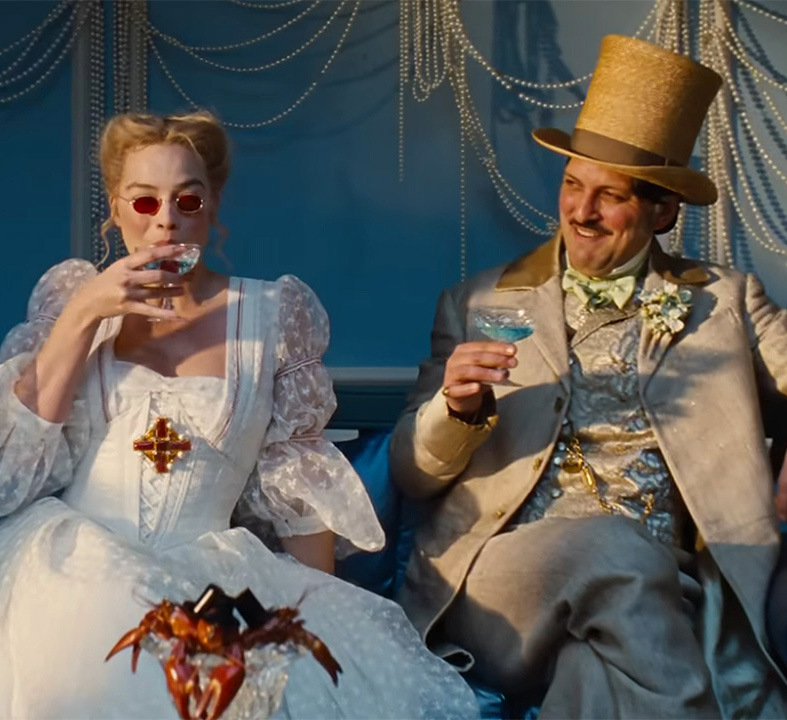
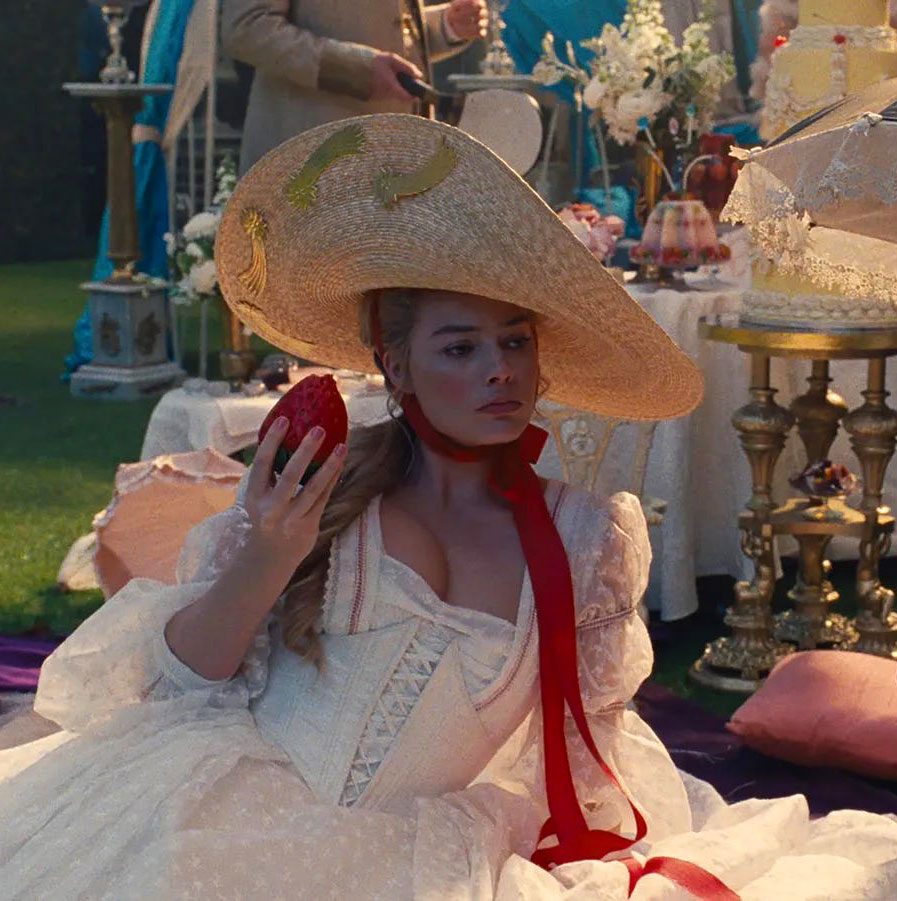
And so we come to the costumes. There have been many criticisms – including from Chap circles – of Wuthering Heights’ failure to stick to period accuracy. Collars are too high, skirts too full and so forth. Some of the costumes owe more to John Galliano than Edith Head, abandoning all pretence to verisimilitude and instead aiming for camp glamour and shock value. Ms Robbie’s decolletage is on such frequent display that often one doesn’t know where to look, and Martin Clunes’ Mr. Earnshaw could easily be a 1960s artful dodger taken to drink for four decades.
Yet these same detractors, crying out for historical accuracy, don’t utter a word of complaint about Hammer Horror films from the 1970s, which dress Count Dracula in outfits that never get a mention in Bram Stoker’s novel. Christopher Lee’s scarlet-lined capes and ruby cufflinks lean closer to Ozzy Clark than to mid-Victorian Transylvanian formal wear, if such a thing ever existed. Boris Karloff’s Frankenstein’s monster, with his green face, high forehead and bolts through his neck in the 1931 version, cuts far more of a dash than Jacob Elordi’s recent outing in bloodied rags.
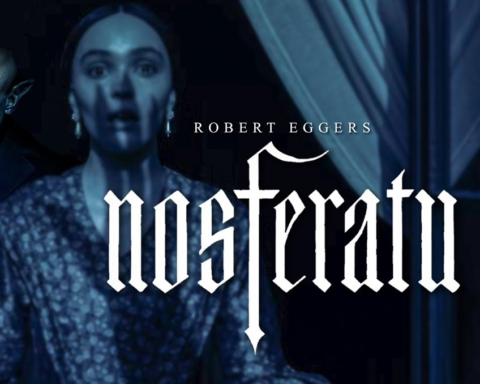
Gothic has nothing to do with historical accuracy. Gothic is a mood that traps the characters uttering their lines within its dark cloak of doom, never allowing them to escape. Gothic is a glimpse of the darkness that dwells within all of us, which cinema allows us to peer into before returning to the brighter world. Which is why, in my opinion, the 1933 production of Nosferatu is pure Gothic, whereas the recent remake by Robert Eggers is not. Fennell’s Wuthering Heights is pure Gothic too, in the way that most previous versions are not. By taking liberties with the plot and inserting a healthy dose of the ridiculous – not to mention lashings of camp – she has conjured an entire movie out of one of Cathy’s key speeches from the novel:
“My love for Heathcliff resembles the eternal rocks beneath: a source of little visible delight, but necessary. Nelly, I am Heathcliff! He’s always, always in my mind: not as a pleasure, any more than I am always a pleasure to myself, but as my own being.”
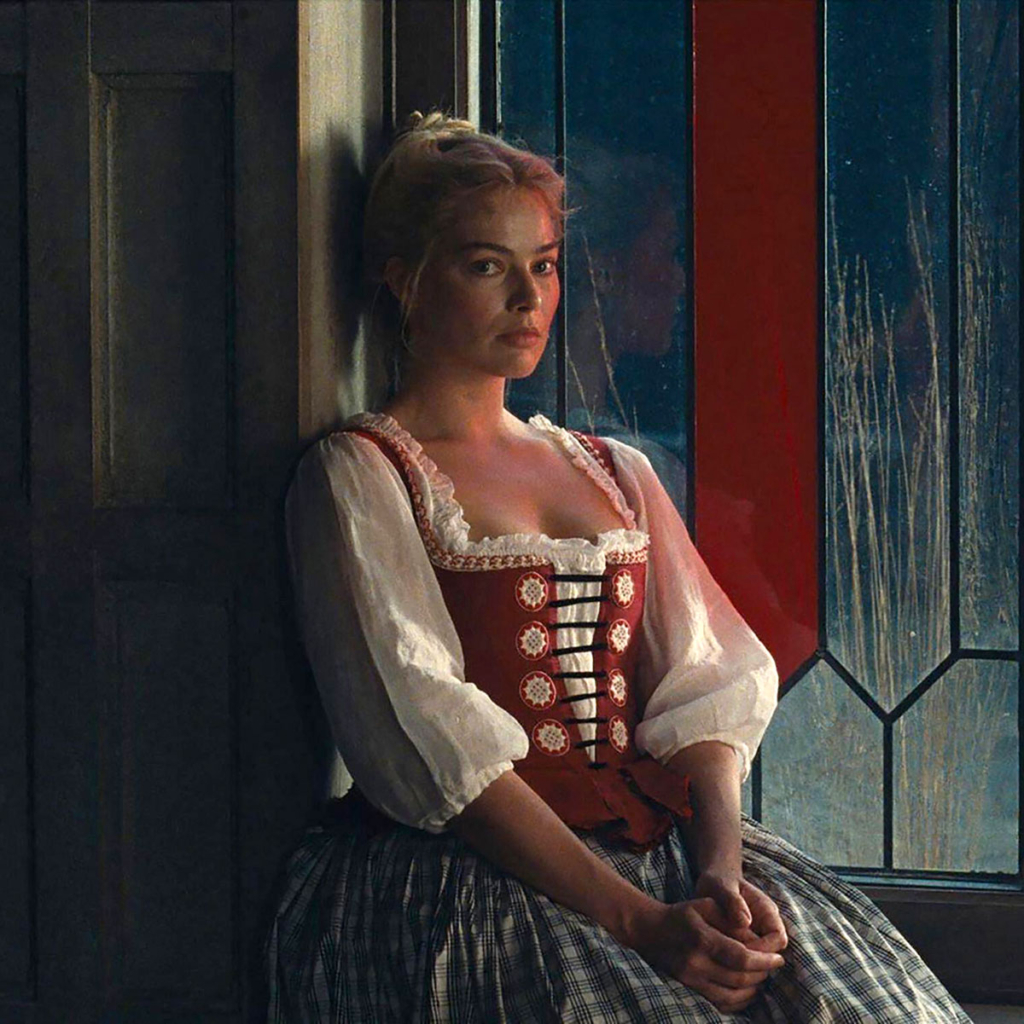
The book of Wuthering Heights is too grand and complex to adapt into a two-hour film, in the same way that Dracula, with its clever epistolary structure, resists cinematic adaptation in its entirety. Precisely what all film directors have previously done with Dracula – boiled it down to the essential parts – is what Fennell has done with Wuthering Heights.
Maybe I was lucky to enter the cinema with low expectations – I did not care for Saltburn very much – and a mind already halfway towards a Gothic mood by the presence of the local eccentric, who had taken his seat bang in the middle of the front row, only lifting his veil when the opening credits ran. Wuthering Heights made us leave the cinema with a feeling of having been soaked to the skin in a skillfully pitched, artistic evocation of another world, so unlike our own that it’s a huge relief to leave it behind, even though we enjoyed the immersion. Exiting the cinema was like coming into a warm, dry house after walking for miles in a rainstorm. The Gothic had done its job.